Capabilities

Engineering across the whole lifecycle

Seven connected stages, from feasibility and design to commissioning and long-term support. Explore the scope, inputs and outputs at each stage.

Manufacturing partner / Juma

From the workshop
to the waterfront.

Steel fabrication, capsule assembly and site installation, shown through original imagery from Juma's project and production archive.

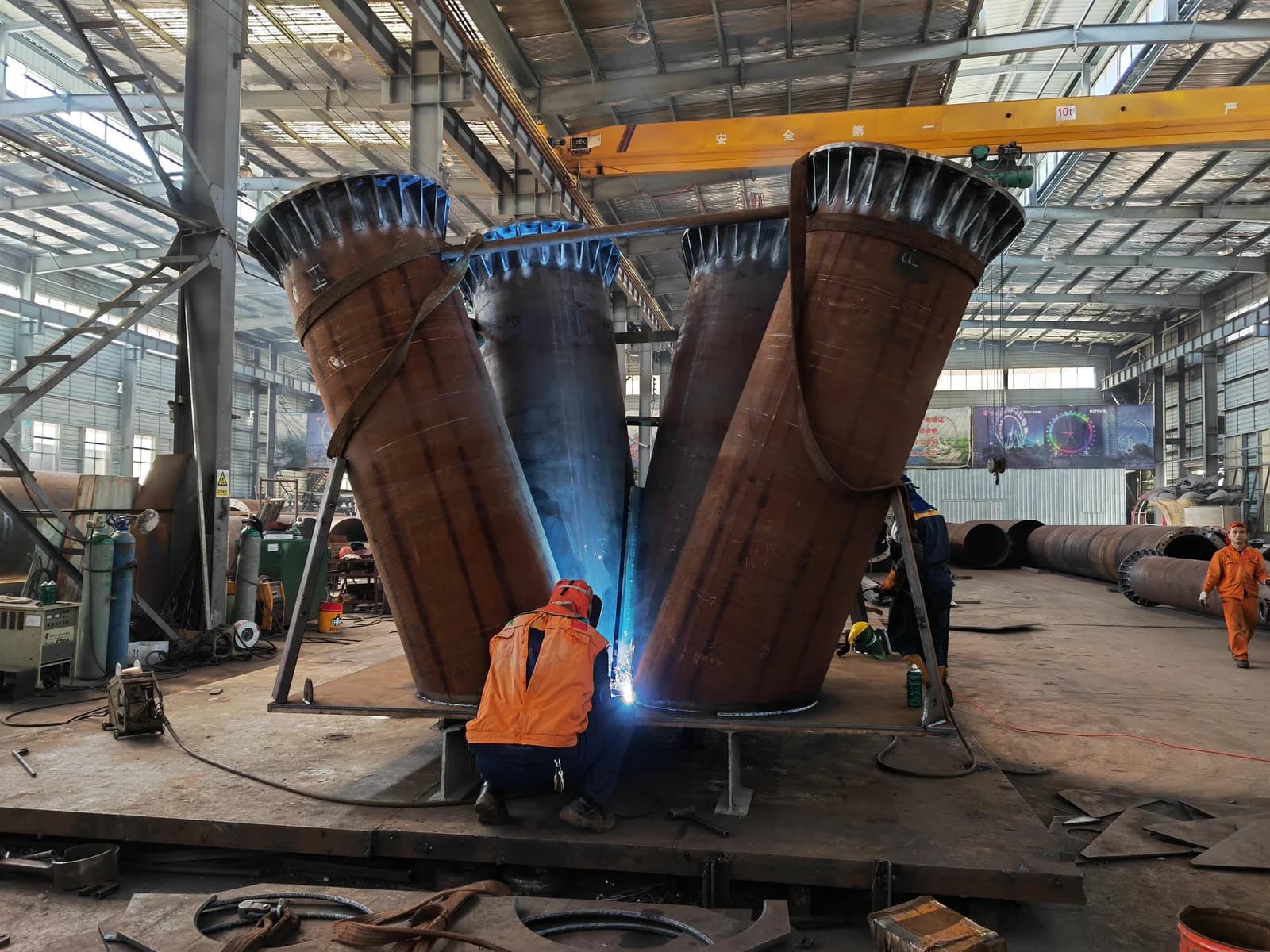
Large steel support components being fabricated inside a Juma workshop
01 / Structural fabricationLarge steel components at Juma's production facility.
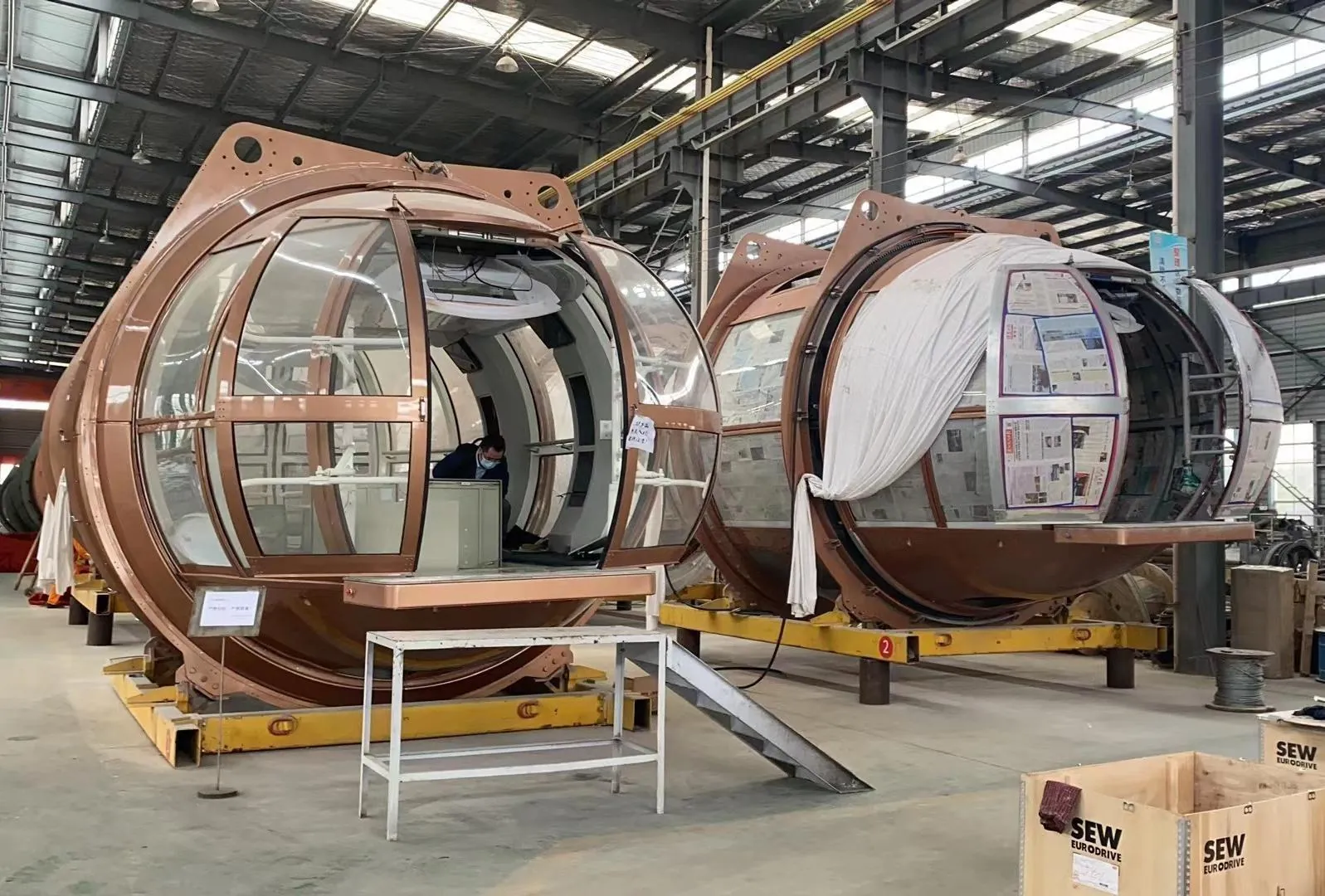
Enclosed observation-wheel capsules undergoing assembly inside Juma's factory
02 / Capsule assemblyCabin structures, glazing and fit-out brought together.
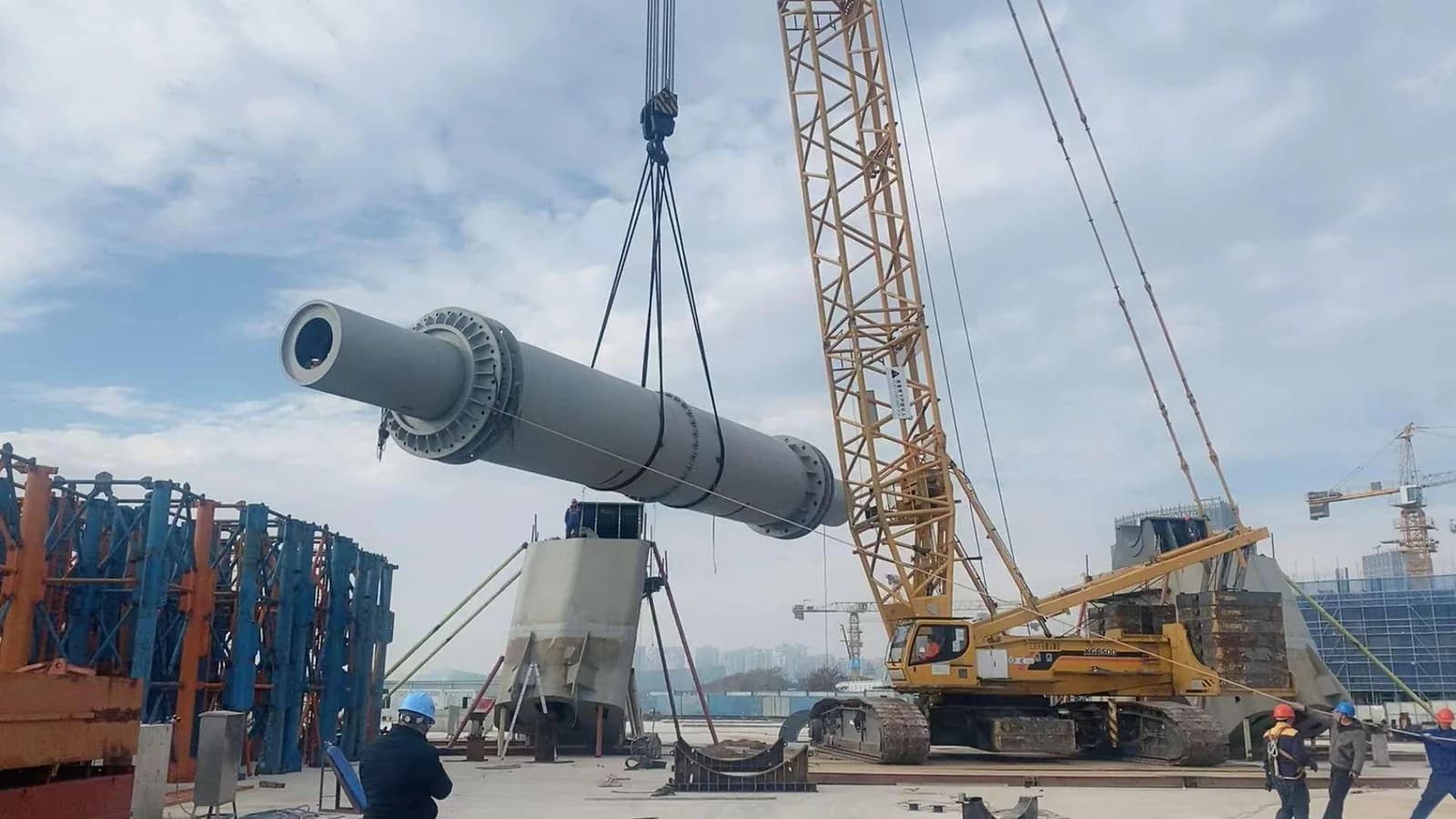
A crane lifting a hub component during installation of the Suzhou wheel
03 / Site installationHub lifting at the Suzhou Jinji Lake wheel.
Wheel and cabin options

Different forms.
A considered choice.

Start with the site, the skyline and the visitor. Juma's portfolio illustrates several configurations that can inform the brief.

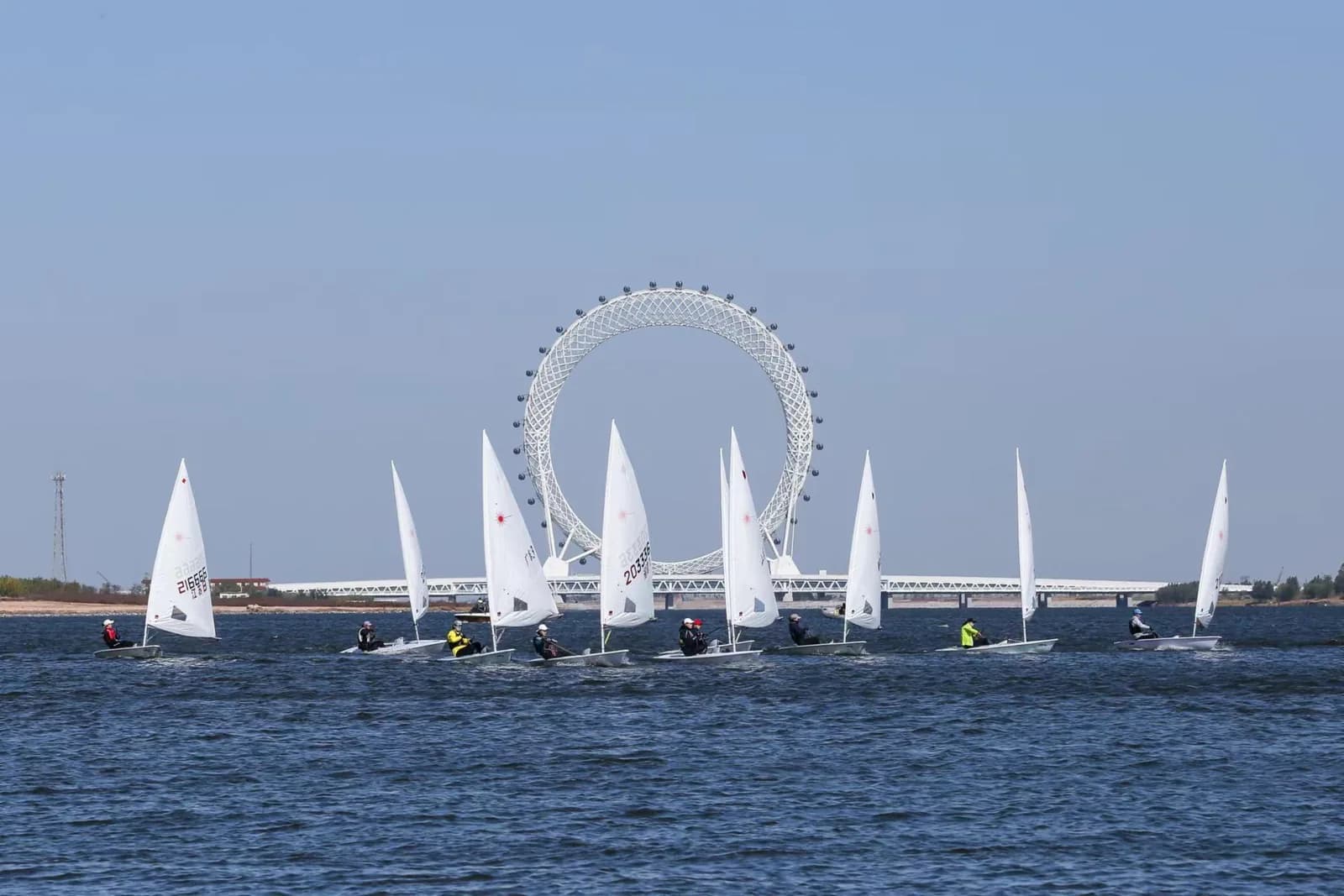
Centreless observation wheel at Weifang, shown in Juma's project profile

Shaftless wheels

An open-centre form creates a distinctive silhouette. The supporting ring, cabin movement and maintenance access need to be resolved as one system.

Juma reference: Weifang, China

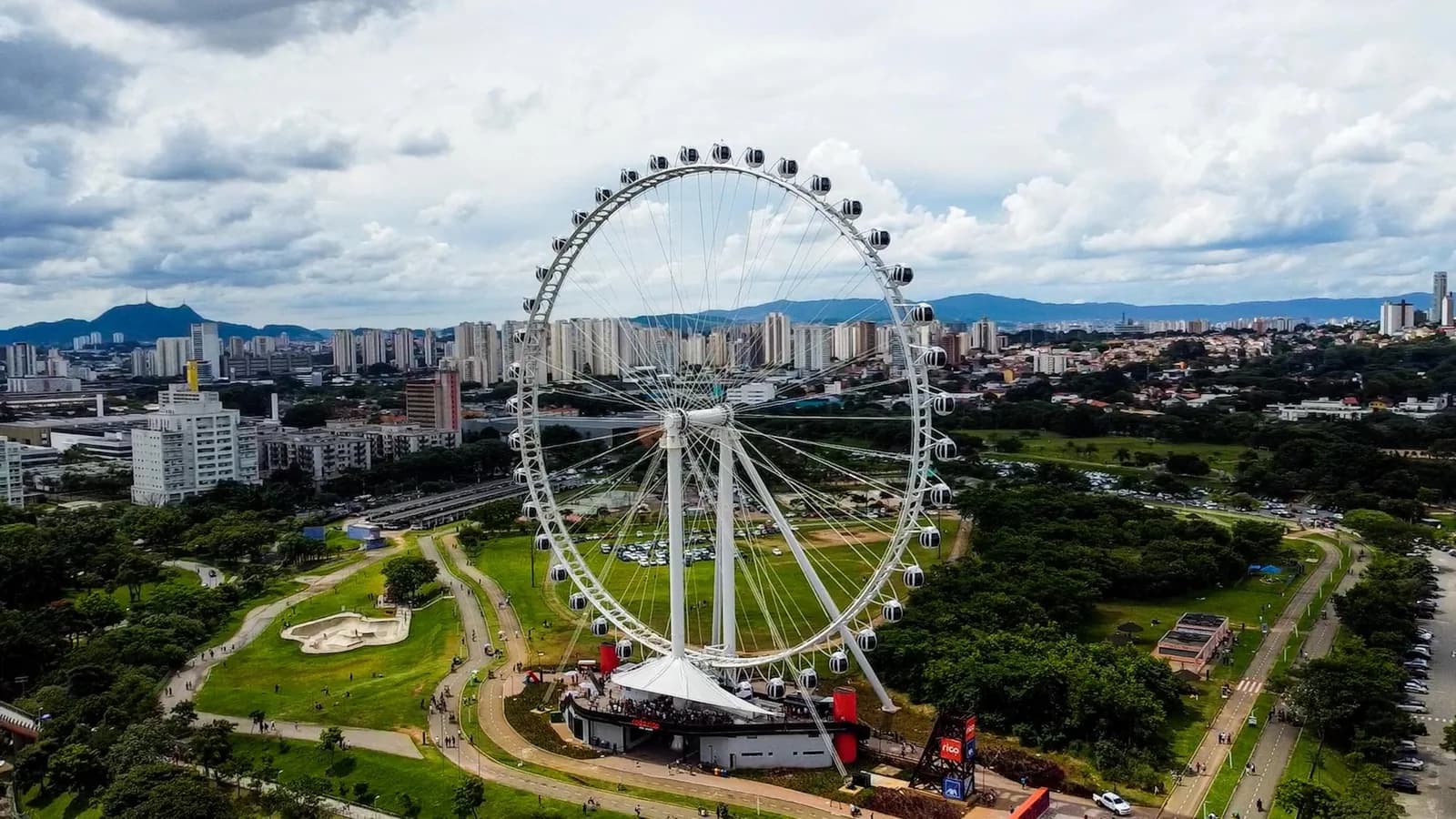
Spokes and supports of the Roda Rico observation wheel

Spoke-supported wheels

A central hub and spoke-supported rim create a familiar observation-wheel form. Geometry, cabin arrangement and structural behaviour are developed around the site brief.

Juma reference: São Paulo, Brazil
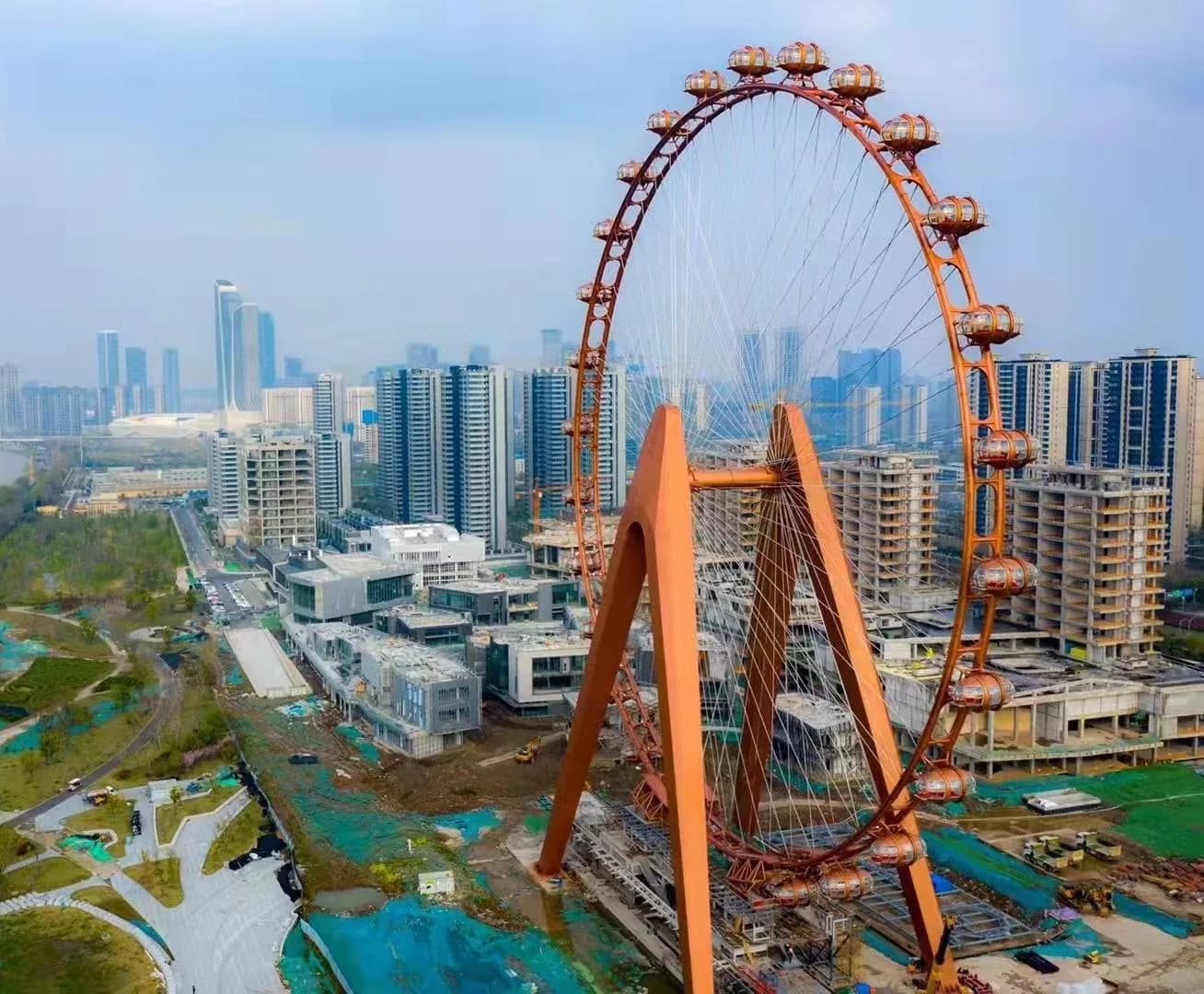
Inclined orange support columns of Nanjing observation wheel

Distinctive support structures

Inclined columns, cross arms and stayed supports offer different architectural possibilities. Foundation loads, access and erection constraints guide the selection.

Juma reference: Nanjing, China
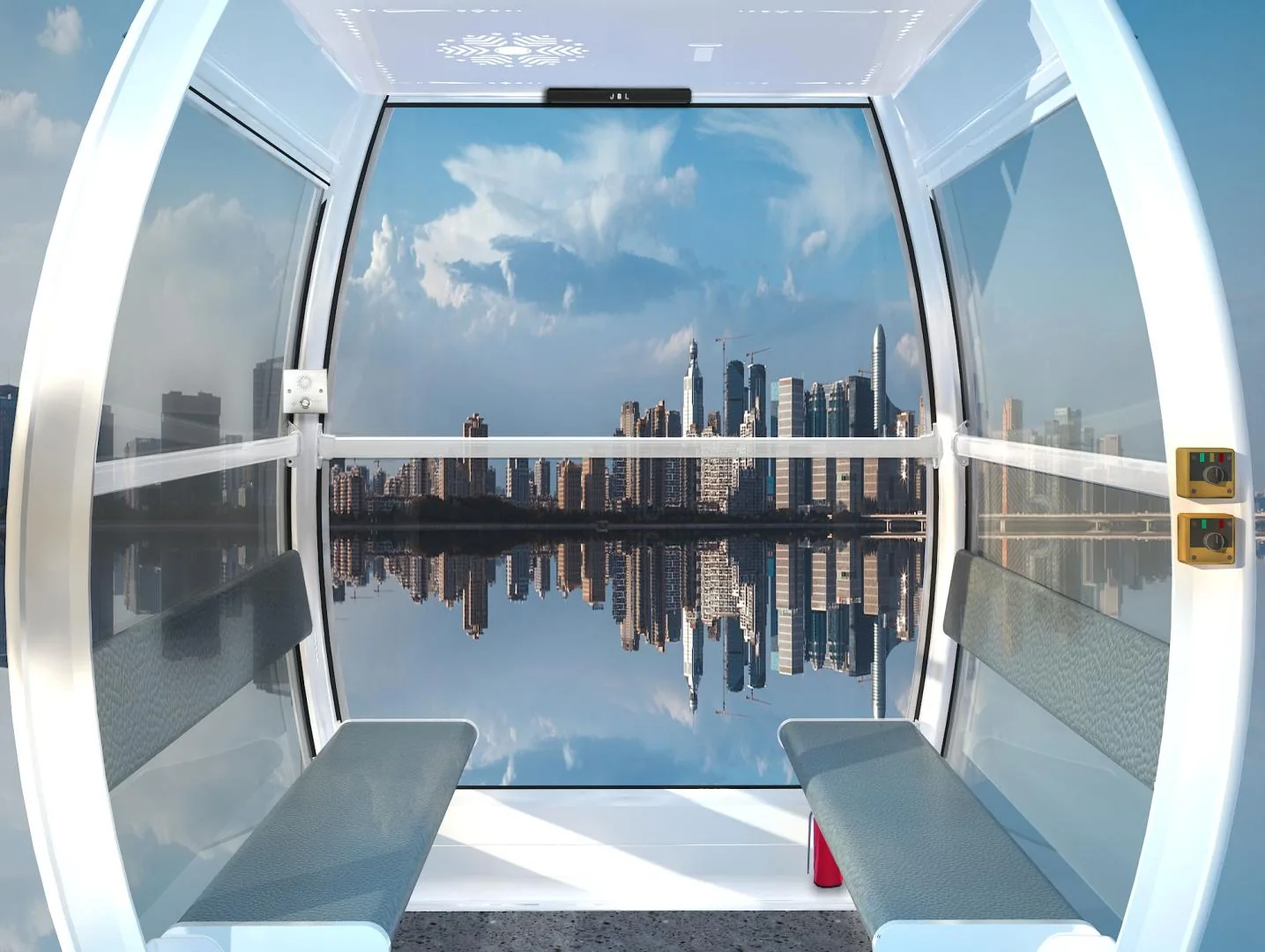
Enclosed wheel cabin with perimeter seating and panoramic glazing, from Juma's profile
Cabin interior example from Juma's profile.
The passenger experience

The cabin shapes the visit.

Compare the operating arrangement before deciding how the interior should look.

Rotating capsules

A controlled levelling arrangement keeps the passenger floor oriented as the wheel turns. Cabin size, views, boarding and system maintenance are assessed together.

Hanging gondolas

Suspended cabins offer a different passenger layout and mechanical arrangement. Seating, ventilation, accessibility and boarding requirements shape the specification.

Custom interiors and themes

Seating, finishes, lighting and themed details can support a city's identity or a private experience. Fit-outs remain subject to structural, fire-safety, accessibility and operating requirements.

Stage 01

Feasibility and business case

Establishing whether a wheel of a given size can be built on a given site, and what it would take.

Disciplines
  • Structural
  • Geotechnical
  • Wind
  • Logistics
  • Operations planning
Engineering focus

The right wheel size depends on ground conditions, wind exposure, visitor demand and access. Feasibility brings these constraints together before the project commits to a height, budget or opening date.

What we do
  • Test candidate wheel diameters against the site envelope, setbacks, sight lines and the surrounding public realm.
  • Establish the governing wind, seismic and temperature cases, then determine what they imply for structural mass.
  • Set out the foundation and ground-improvement question early, because it usually decides the programme.
  • Map the transport and lifting constraints that will govern how large a single delivered component can be.
  • Produce a capacity and throughput model from cabin count, cabin size and rotation strategy.
  • Identify the approvals, standards and third-party review the scheme will have to satisfy.
What we need from you
  • Site boundary, levels and any existing ground investigation
  • Intended visitor profile and operating hours
  • Programme expectations and any fixed opening commitment
  • Known planning, heritage or aviation constraints
What you get
  • A feasible diameter range with the reasoning behind each limit
  • Indicative structural form and foundation strategy
  • Capacity and throughput envelope
  • Constructability and logistics assessment
  • A risk register naming what must be resolved before design begins

Delivery responsibilitiesGround investigation, wind tunnel testing and site survey are procured from specialist providers. We define the scope and interpret the results.

Stage 02

Concept and experience design

Resolving how the wheel is read from the city, and how a visitor moves through it.

Disciplines
  • Experience design
  • Structural
  • Lighting
  • Accessibility
  • Operations
Engineering focus

A landmark must work at two scales: on the city skyline and inside the cabin. Concept design balances the silhouette, passenger views, boarding experience and surrounding public space.

What we do
  • Study the silhouette from the approaches that matter, including bridges, waterfronts and arrival roads.
  • Resolve rim depth and spoke arrangement against the view from inside the cabin.
  • Set the boarding strategy: continuous rotation or stopped boarding, and what each costs in throughput.
  • Plan queue, boarding, accessibility and evacuation as one sequence rather than three separate problems.
  • Establish the lighting approach as part of the structure, not as an addition to it.
What we need from you
  • Destination positioning and intended visitor experience
  • Any architectural language the wider development follows
  • Accessibility commitments and expected group profiles
What you get
  • Silhouette and skyline studies from agreed viewpoints
  • Cabin arrangement and sight-line analysis
  • Boarding and circulation strategy with throughput implications
  • Integrated lighting intent

Delivery responsibilitiesArchitecture for terminal buildings and the surrounding public realm is normally led by the project architect. We coordinate the wheel interface.

Stage 03

Engineering and systems

The structural, mechanical, electrical and control engineering that makes the wheel work.

Disciplines
  • Structural
  • Mechanical
  • Electrical
  • Control systems
  • Functional safety
  • Fatigue and dynamics
Engineering focus

The structure, drive, cabin suspension and controls operate as one system. Engineering must resolve their interfaces, environmental loads, fatigue and safe recovery together.

What we do
  • Engineer the rim, spoke and hub system as a load path, from cabin to spindle to A-frame to foundation.
  • Design the drive and braking arrangement for the required rotation strategy, including holding and recovery cases.
  • Engineer cabin suspension and levelling so the floor stays level through the full rotation.
  • Specify the control system and its safety-related functions, with the interlocks and monitoring they need.
  • Carry out the fatigue assessment that governs a structure cycling continuously for its design life.
  • Model dynamic response under wind, and set the operating and shutdown envelope that follows.
What we need from you
  • Confirmed site environmental data
  • Operating profile: hours, rotation strategy, expected annual cycles
  • Any client or authority standards that apply in addition to the governing code
What you get
  • Structural analysis and design of rim, spokes, hub, spindle and support legs
  • Mechanical design of drive, braking and cabin stabilisation
  • Electrical distribution and control system architecture
  • Safety function definition and interlock schedule
  • Fatigue and dynamic assessment
  • Interface schedule for every party touching the wheel

Delivery responsibilitiesIndependent design review is carried out by a third party appointed for that purpose. We provide the design basis, calculations and models it reviews.

Stage 04

Procurement and local manufacturing integration

Turning a design into fabricable packages, and qualifying who fabricates them.

Disciplines
  • Materials and welding
  • Quality engineering
  • Supply chain
  • Structural detailing
Engineering focus

Components from different suppliers must meet agreed material, welding and dimensional requirements. Early qualification supports local manufacturing while keeping fabrication and site interfaces consistent.

What we do
  • Break the design into fabrication packages that match real supplier capability.
  • Write enforceable technical requirements for materials, tolerances, welding and inspection.
  • Assess and qualify fabricators against those requirements, including regional suppliers.
  • Set the inspection and test plan before fabrication starts, not after a problem appears.
  • Support the client's procurement process with technical evaluation of tenders.
What we need from you
  • Local content expectations and any procurement rules that apply
  • Commercial strategy: single package or multiple
  • Preferred or mandated suppliers, if any
What you get
  • Fabrication package definition
  • Technical specifications and acceptance criteria
  • Supplier qualification assessments
  • Inspection and test plans
  • Technical tender evaluation

Delivery responsibilitiesCommercial negotiation and contract award sit with the client. We provide the technical basis for the decision.

Stage 05

Erection and site integration

The engineering of how the wheel is assembled and raised.

Disciplines
  • Construction engineering
  • Temporary works
  • Heavy lift
  • Survey
  • Site safety
Engineering focus

During assembly, the structure passes through temporary load cases that differ from its completed condition. Each lift, support arrangement and tensioning stage needs an engineered sequence.

What we do
  • Engineer the erection sequence as a series of analysed structural states, not as a construction preference.
  • Design temporary works, strand-jacking and lifting arrangements with the permanent structure's capacity in mind.
  • Set the spoke tensioning sequence and the stage-by-stage geometry it has to achieve.
  • Define survey control and the tolerances that each stage must hold.
  • Set weather limits for lifting and tensioning operations.
What we need from you
  • Site access, laydown area and crane standing constraints
  • Programme milestones and any constrained working periods
  • Local regulatory requirements for lifting operations
What you get
  • Analysed erection sequence with stage-by-stage load cases
  • Temporary works and lifting engineering
  • Tensioning sequence and target geometry
  • Survey and tolerance regime
  • Erection method statements

Delivery responsibilitiesThe erection contractor executes the works and carries the safety duties of the site. We engineer the sequence and verify each stage.

Stage 06

Testing, certification and commissioning

Demonstrating, to an independent party, that the wheel is safe to carry passengers.

Disciplines
  • Certification
  • Functional safety
  • Commissioning
  • Quality assurance
  • Operations
Engineering focus

Passenger readiness requires a planned test programme, operating documentation and the applicable independent assessment and approvals. Defining the evidence at design stage gives the project a clear route to handover.

What we do
  • Plan the certification route with the notified or independent body at design stage.
  • Compile the technical file the assessment is based on.
  • Define and run the static, dynamic and functional test programme.
  • Prove the safety-related control functions, including the failure cases.
  • Run the trial operating period that establishes the wheel is ready for passengers.
What we need from you
  • The certification regime that applies in the jurisdiction
  • Operator readiness and staffing for trial operations
  • Programme allowance for the test period
What you get
  • Certification strategy and technical file
  • Test and commissioning plan
  • Test records and evidence pack
  • Handover documentation and operating limits

Delivery responsibilitiesAssessment and certification are performed by an independent body. We prepare and present the evidence; we do not certify our own work.

Stage 07

Operations readiness and lifecycle services

Keeping the wheel safe, available and economic for the decades after it opens.

Disciplines
  • Reliability
  • Asset management
  • Structural inspection
  • Operations engineering
Engineering focus

Reliable operation depends on maintenance access, inspection intervals, trained staff and available spares. Planning these during design supports the operator throughout the asset life.

What we do
  • Set the maintenance and inspection regime from the fatigue and reliability basis of the design.
  • Define the spares strategy for the components with long lead times.
  • Support operator training and the technical content of operating procedures.
  • Plan structural inspection over the asset life, including the intervals that matter for a rotating structure.
  • Provide engineering support for modification, refurbishment and life extension.
What we need from you
  • Operating model and in-house maintenance capability
  • Availability targets and acceptable closure windows
  • Asset management and reporting requirements
What you get
  • Maintenance and inspection regime
  • Spares and obsolescence strategy
  • Technical input to operating procedures
  • Lifecycle structural inspection plan

Delivery responsibilitiesDay-to-day operation and maintenance are carried out by the operator. We set the technical regime and support it.

Solution families

Three routes to a landmark wheel

Which one fits depends on whether programme certainty, silhouette or destination integration governs the scheme.

Standard observation wheels

A resolved structural and mechanical arrangement, sized to the site rather than redesigned from first principles.

  • Established configuration for programme planning
  • Proven arrangement of rim, spoke and drive systems
  • Configurable diameter, cabin count and cabin specification
  • Suited to sites where programme certainty governs

Bespoke observation wheels

A wheel engineered around a specific site, silhouette and civic ambition, where the landmark reading governs.

  • Structural form developed for the site and skyline
  • Cabin and boarding arrangement designed to the visitor experience
  • Integrated lighting and identity treatment
  • Suited to schemes where the wheel is the destination

Landmark structures and destination integration

The wheel as one element of a larger destination, engineered against everything it touches.

  • Interface engineering with terminal, retail and public realm
  • Coordination with masterplan, transport and marine works
  • Integration of hospitality, events and sponsorship possibilities into the physical design
  • Suited to waterfront and mixed-use destination schemes
Erection

A wheel is a different structure at every stage of its assembly

The completed, tensioned wheel is not the structure that has to survive construction. Each stage is analysed as its own structure, with its own load cases, geometry targets and weather limits.

01 · LEGS + SPINDLE02 · RIM SEGMENTS03 · TENSIONING04 · COMPLETE
ROUTER RIMCABIN PITCH
Geometry

Every parameter is a decision with consequences

Diameter, rim depth, spoke count and tension, hub geometry, cabin pitch and cabin mass are not independent choices. Changing one re-opens the others, which is why they are resolved together and early.

Discuss a landmark project